



Junior padel in the United States is at an inflection point. Participation continues to climb, interest among young athletes is genuine, and clubs across the country are expanding their youth programming. Yet for all of that momentum, one challenge persists: building the dense, structured competitive ecosystem that developing players need to reach their full potential.
A recent training trip organized by families from Nicol NJ offers a clear-eyed look at both the promise and the work still ahead and stands as an example of what it looks like when players, parents, coaches, and clubs come together in service of the sport’s future.
When Talent Outpaces Infrastructure
In established racquet sports, junior athletes benefit from decades of built-out competition structures: local leagues, regional circuits, scholastic programs, and national pathways. Junior padel in the United States is still in the process of building those foundations. In many areas, particularly outside of major padel markets, competitive opportunities for young players are limited and require significant initiative to access.
Nicol NJ has been among the clubs leading the way in the Northeast, introducing young athletes to padel through junior programming and multi-sport camps that include squash, pickleball, and padel. For many of these players, Nicol represents their first real exposure to the sport. As their skills develop, though, the need for consistent high-level competition becomes harder to meet locally.
That gap prompted one Nicol family to look beyond the region for answers.
A Connection That Started With One Message
In December, Nicol junior parent Erina Watts reached out to renowned coach Lorena Rouillon Jimenez, whose contact information she found through the USPA website, with a straightforward question: could a group of Nicol juniors travel to Miami to train?
More than two months of coordination followed. Rouillon, who maintains one of the most demanding schedules in junior padel development, traveling to international competitions, logging eight to twelve hours on court daily, and managing a constant flow of communication, still found time to help organize the experience. That willingness to support emerging junior programs, regardless of the logistics involved, reflects the collaborative culture that is genuinely shaping the sport’s growth in this country.
Eventually, dates aligned, travel was arranged, and a weekend of meaningful competition and development became a reality.
What Development Looks Like in Practice
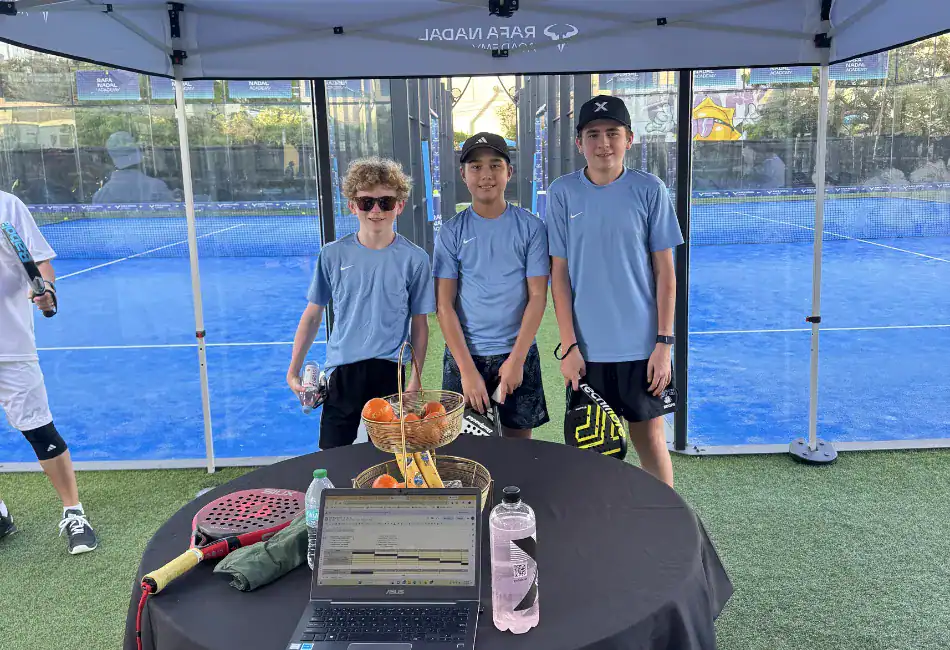
On the courts in Miami, Nicol juniors trained alongside local players in a more competitive environment than they could access at home. Sessions were led by Lorena Rouillon and her brother, Jaume Rouillon Jimenez, a national-level junior coach in his own right, both of whom are known for their emphasis on long-term athlete development and individualized feedback.
The competitive portion of the trip included the Padel Rise tournament at Padel X, where each team played five matches, a volume of competitive experience that remains rare for junior players in emerging padel markets across the country. That kind of match repetition is exactly what accelerates development, and it is precisely what programs like this are working to make more accessible.
Even when circumstances required a parent to step in as a substitute partner after one junior fell ill, the tournament environment was welcoming and inclusive. It is a dynamic that anyone who has spent time in the padel community will recognize: the sport has a quality of openness that supports players at every stage of development, and that quality was very much present throughout the weekend.
A Network That Crosses Borders
Beyond the court time and competition, perhaps the most significant outcome of the trip was the network it helped create.
Through Rouillon’s connections, families were linked into an international communication network that connected junior players and their parents across multiple countries. In this network, families share training footage, discuss development strategies, and even coordinate playing partnerships across borders, a form of grassroots collaboration that is unique to a sport still in the process of building its junior infrastructure.
One compelling example of this network in action is the partnership that developed between the Nicol family and Matthew Toro, a young Colombian player with dual citizenship whose passion for padel has taken him on a remarkable journey. Matthew had traveled from Colombia to Miami, where Lorena and Tato Rouillon invited him to train at the Rafa Nadal Padel Academy and the Padel X Kids Academy at no cost. He competed in several matches alongside them, and the Rouillons recognized his considerable potential early on.
Back in Colombia, Matthew continued training and exchanging videos with families and coaches in the U.S., building relationships across borders through shared footage and development discussions. His father, Ignacio Toro, played an instrumental role throughout this process, coordinating communication, aligning training approaches, and helping lay the groundwork for what would become a genuine international partnership.
That collaboration has now produced a real competitive outcome: Matthew will partner with Erina’s son to compete in the FIP Promises tournament in Miami. It is an unconventional pathway, built entirely on initiative, trust, and a shared love of the sport, but it is producing meaningful results for players who might otherwise have limited access to high-level competition. For Matthew, and for the families who helped make it happen, it stands as proof that padel’s junior community is capable of building something truly borderless.
The Players Who Are Leading the Way
Juniors like Alexson Watts, Griffin Dorment, Gavin Purcell, and Wilder Anderson, each of whom participated in the Miami trip, represent a generation of players in America who are approaching padel with competitive seriousness. Their development is not happening through a fully built system. It is happening because families, clubs, and coaches are actively building that system around them.
Clubs like Nicol are essential to that process. By providing early exposure, fostering multi-sport development, and connecting juniors with opportunities beyond their immediate communities, they are laying the groundwork for what comes next: a structured national junior ecosystem with the density, competition, and pathways that the sport’s growing talent base deserves.
The Bigger Picture
The United States Padel Association (USPA)’s mission is to grow padel in the country at every level, from grassroots participation to elite competition and national team representation. Junior development sits at the center of that mission. The players who are competing in their first FIP Promises events, earning their first ranking points, and making their first cross-country or international training trips today are the foundation of the national team programs and professional development pathways of tomorrow.
What the Nicol trip illustrates is that the infrastructure for junior padel in the U.S. is not waiting to be handed down from above. It is being built by coaches who give their time, by parents who organize travel, by clubs that open their courts, and by players who show up ready to compete.
The long-term growth of padel in America depends on juniors, and as this story makes clear, that growth is already well underway.