



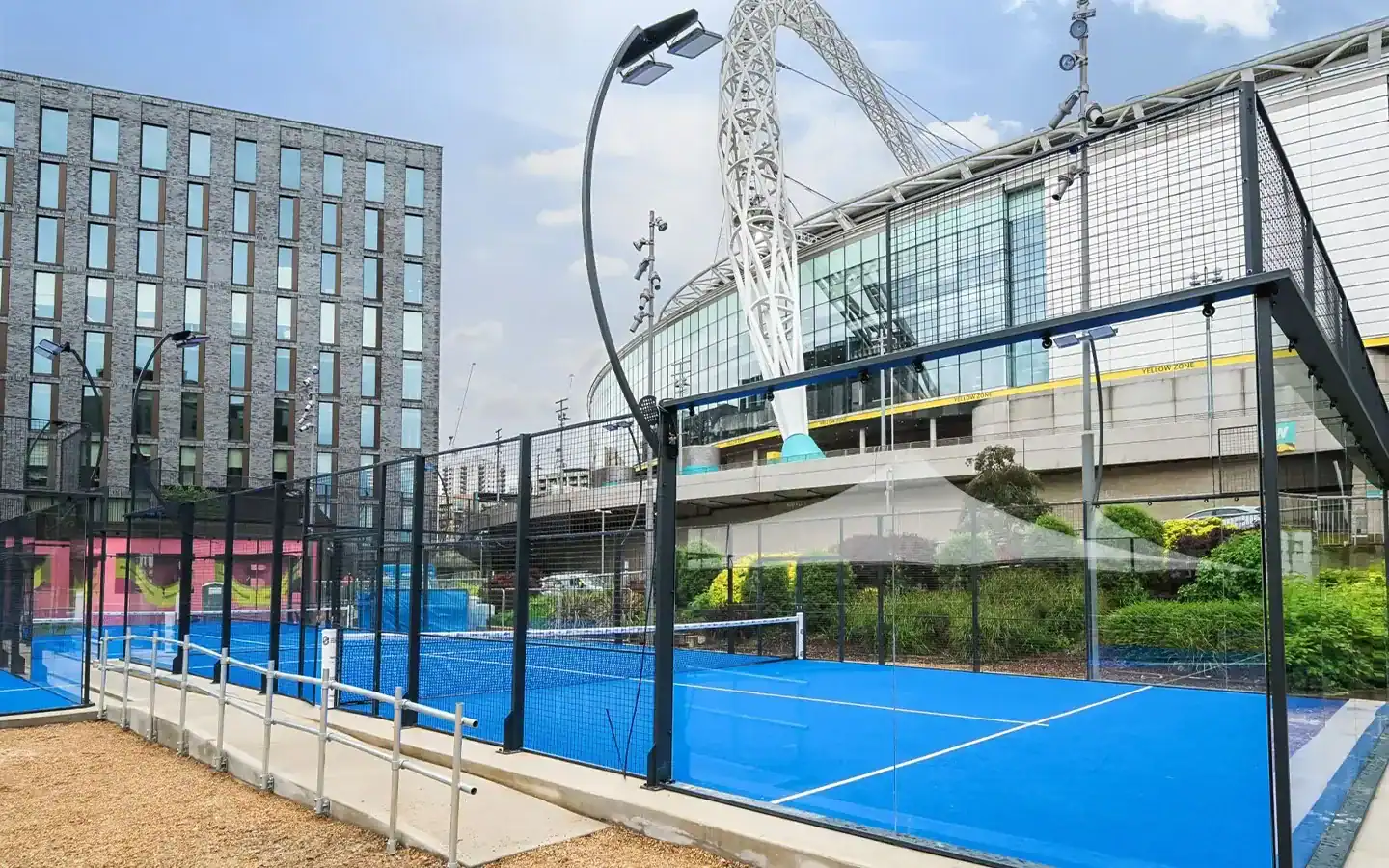
Lighting consistency, structural stability, glass visibility, and player safety all become even more important when courts are used intensively by a wide range of players.
Manufacturers with experience at the top of the sport understand how small design decisions can have long-term operational consequences. That knowledge allows clubs to benefit from courts that not only look impressive on opening day but continue to perform season after season. MejorSet, as the official court of Premier Padel and an endorsed padel court manufacturer of the USPA, understands the connection between the professional and club game. This connection between professional padel and club infrastructure is one of the key drivers behind the rising expectations of players and operators alike.
As padel continues to grow globally and in the United States, this connection between elite competition and club infrastructure is becoming increasingly relevant. The question for clubs and operators is no longer simply how many courts to build, but what standards those courts should meet.
When professional standards become the reference point
At the highest level, padel courts are designed under extreme conditions. They must withstand intense usage, meet strict safety requirements, deliver optimal visibility for players and spectators, and perform consistently in demanding environments.
These are the same principles applied in competitions organized under the Premier Padel umbrella and governed by the International Padel Federation. At this level, infrastructure is not just a technical requirement, but a critical part of the sporting product.
When these professional standards are translated to the club environment, they bring clear benefits. Courts age better, require fewer corrective interventions, and support a broader range of uses, from daily play and coaching to events, exhibitions, and media content.
Building courts for iconic venues
MejorSet’s role as an official court provider at the highest level of international padel has been shaped by some of the sport’s most iconic settings. Among them is Roland Garros, where padel has been showcased in a venue synonymous with sporting excellence and global visibility.
MejorSet courts have also been selected for the Premier Padel Finals, Majors, World Padel Championships, and the most demanding events on the professional calendar. These environments require absolute reliability, precision, and performance, leaving no margin for improvisation.
Experience gained in such settings feeds directly into how courts are designed and built for clubs, ensuring that solutions are tested under the highest possible level of scrutiny before being applied at a commercial level.
ASCE 7 Explained: How U.S. Wind Load Regulations Impact Padel Court Construction
In the United States, padel courts are increasingly treated as permanent sports structures, which means they must comply with structural regulations such as ASCE 7, the standard that defines wind load requirements for buildings and other public structures. Unlike generic “wind resistant” claims, ASCE 7 requires courts to be engineered for specific wind speeds measured in miles per hour, taking into account exposure and structural behavior. In response to these requirements, MejorSet has introduced a new court model, the RC MAX, developed specifically for the U.S. market. The RC MAX is a fully panoramic padel court engineered in accordance with ASCE 7 criteria and is currently the only panoramic court certified in the United States to resist wind speeds of up to 120 mph, combining visibility, safety, and structural compliance in a single system.
More than courts, complete venues
As padel matures, clubs are increasingly positioning themselves as destinations rather than purely sports facilities. Courts must work not only for players but also for spectators, content creation, and brand activations.
Tournament-grade elements, such as panoramic design, professional lighting, and clean architectural integration, create venues that can host exhibitions, competitive events, and community-driven experiences. These features help clubs extend their reach beyond their immediate membership and connect with a broader audience.
Of course, padel’s long-term success will not be defined solely by participation numbers or media exposure. It will be shaped by the quality of the infrastructure that supports it.
By connecting the demands of the professional circuit with the realities of club operations, and by continuing to innovate in response to local conditions, padel can grow in a way that is both ambitious and sustainable.
In that balance between performance, safety, and experience lies the future of the sport.