


Every club owner building a padel facility eventually asks the same question: What surface should the court actually be built with? The right answer depends on a mix of budget, climate, and whether the court is indoor or outdoor, and getting it right the first time saves a lot of money down the road.
USA Padel regularly fields these questions from operators, developers, and first-time club owners across the country. This guide draws on technical specifications and guidance from Mondo, a world-leading manufacturer supplying turf to padel clubs, as well as general industry considerations.
Turf types: the basics (indoor and outdoor)
Today, the most common surface for padel courts, indoor or outdoor, is artificial turf. Compared to concrete or synthetic resin, turf plays better underfoot and handles the sliding and stopping that padel demands. Players notice the difference immediately when they switch between surface types.
There are three main types of artificial turf, differing by filament construction:
Fibrillated filament. Made by cutting a wider sheet of material into individual strands. It’s generally the least expensive option, but it tends to wear faster, and the filaments can curl over time with repeated play.
Monofilament. Each strand is produced individually, with small built-in ribs for grip and durability. It’s the same basic approach used on many tennis courts and typically holds up better than fibrillated turf under heavy use.
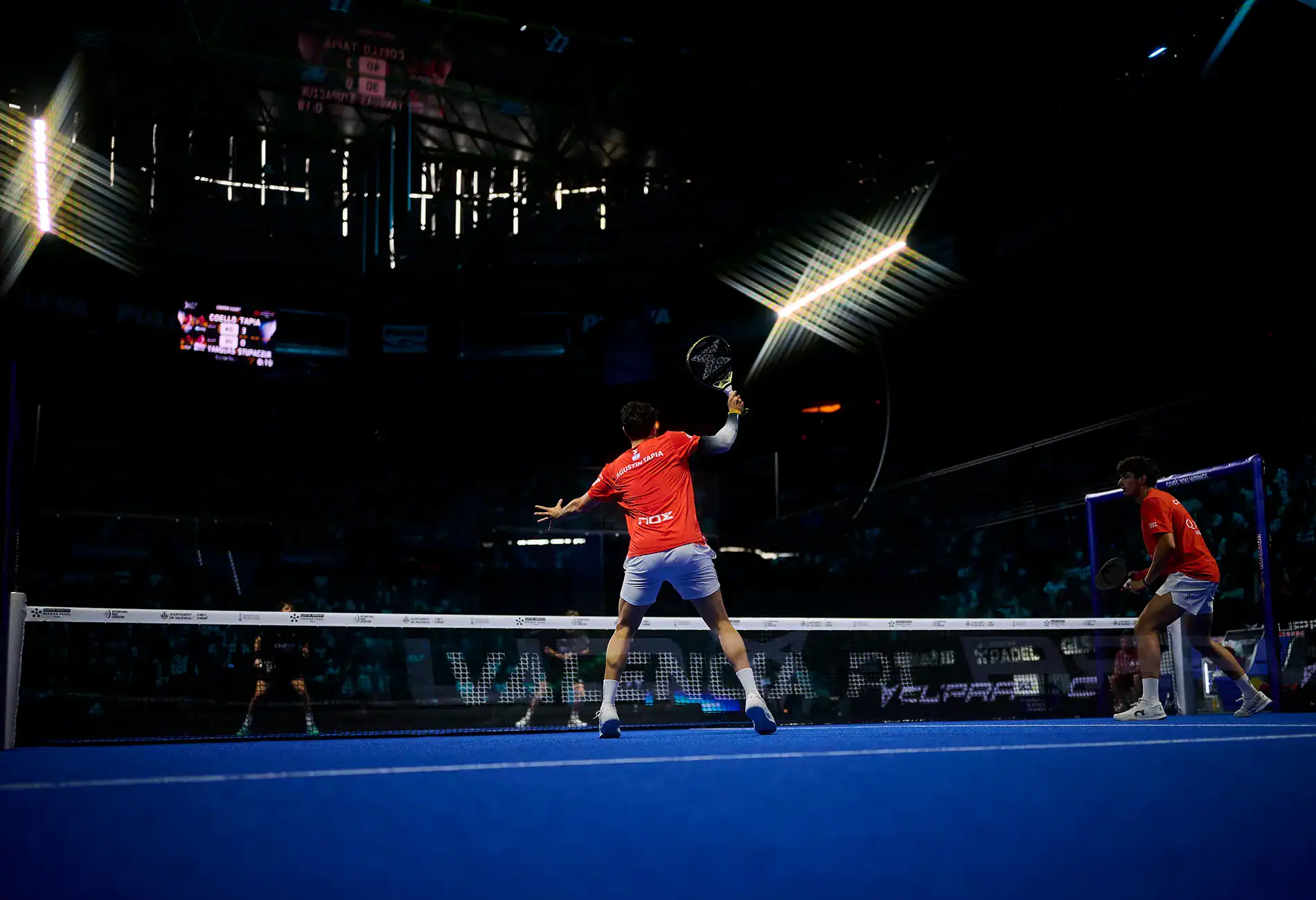
Texturized monofilament. This is the surface used at the highest level of the sport, for example, Premier Supercourt X3, the official court surface for Premier Padel and the International Padel Federation. It’s engineered for consistent ball bounce, lower infill requirements, and better long-term wear. It costs more upfront, but clubs that install it typically push their resurfacing timeline out significantly compared to cheaper options.
A caution worth repeating to any club owner: Turf within the same category can perform very differently depending on the manufacturer. Two courts, both labeled “monofilament,” can play completely differently. Before signing with any installer, ask for ball-bounce and abrasion-test data specific to the product they’re proposing, not just a sample swatch. Reputable manufacturers should be able to produce this data on request; treat reluctance to share it as a red flag.
Indoor-specific considerations
Indoor courts are shielded from the weather, but they come with their own set of factors:
- Climate control. HVAC systems affect humidity and temperature consistency, which can influence infill behavior and ball bounce over time. Ask about the recommended operating range for the turf you’re considering.
- Lighting. Artificial lighting angle and glare affect ball visibility differently from natural daylight. Worth testing on-site before committing to a fixture layout.
- No natural rinsing. Without rain, dust and debris build up in the infill and must be managed through regular maintenance rather than washed out naturally (see the maintenance section below).
- Ventilation and odor. Enclosed spaces need adequate airflow to prevent moisture buildup in infill, which can otherwise contribute to odor or bacterial growth over time.
Outdoor-specific considerations
Outdoor courts have to withstand whatever the local climate throws at them, and that varies widely by region.
UV radiation. Sun exposure is typically the biggest long-term threat to lower-quality turf: it fades color and breaks down fibers, eventually causing fragments to detach. Better turf lines build anti-UV additives into the filament during manufacturing to resist this. Clubs in high-UV regions (the Southwest, Florida, and similar climates) should ask installers directly about UV testing and warranty terms specific to sun exposure.
Rain: a mixed factor, not a pure positive. Rain does wash dust, soot, and debris out of the turf, which helps keep infill clean and drainage working properly. But it’s not without downsides:
- Poor drainage design can lead to standing water, which affects playability and can accelerate wear.
- In colder climates, freeze-thaw cycles can stress the base and infill over time.
- Consistently humid or wet conditions can create conditions for algae or mold if the court isn’t cleaned and drained properly.
- Wet turf during or immediately after rain increases the risk of slips until it dries.
Good drainage design and material selection matter more than rain itself. Ask installers how their base and drainage system is engineered for your specific rainfall patterns, not just whether the turf is “rated for outdoor use.”
Wind. Even with glass walls in place, strong wind can push infill sand to one side of the court or eject it entirely. This is more of a maintenance issue than a structural one, and periodic redistribution of infill restores performance.
Maintenance: lighter than most owners expect, but not optional
A well-built turf court doesn’t require much upkeep, but what it does need has to happen consistently:
- Keep the surface clean of debris.
- Check and redistribute infill periodically. How often depends on usage volume and, outdoors, on wind exposure.
- Water the surface periodically, roughly monthly for indoor courts, and based on rainfall for outdoor courts.
Outdoor courts near trees need extra attention: tree resin should be cleaned before it stains or damages the turf, and leaves, seeds, and flowers should be cleared before they decompose and create conditions for mold. A basic weed-control schedule around the court’s edges also helps prevent creeping growth.
None of this is complicated, but consistency matters more than intensity. Clubs that stay on top of routine maintenance can often extend their resurfacing timeline well beyond a manufacturer’s minimum estimate. Exact numbers vary by turf type, usage, and climate, so ask any manufacturer you’re considering for their specific projected lifespan under your conditions.
Bottom line for first-time buyers
Before choosing a surface, ask any installer or manufacturer for:
- Ball-bounce and abrasion-test data for the specific product (not just the general category)
- UV warranty terms, if outdoor
- Drainage engineering details specific to your site and climate
- A realistic resurfacing timeline estimate based on your expected usage volume
Getting these answers in writing before signing is the single best way to avoid an expensive surprise a few years into ownership.